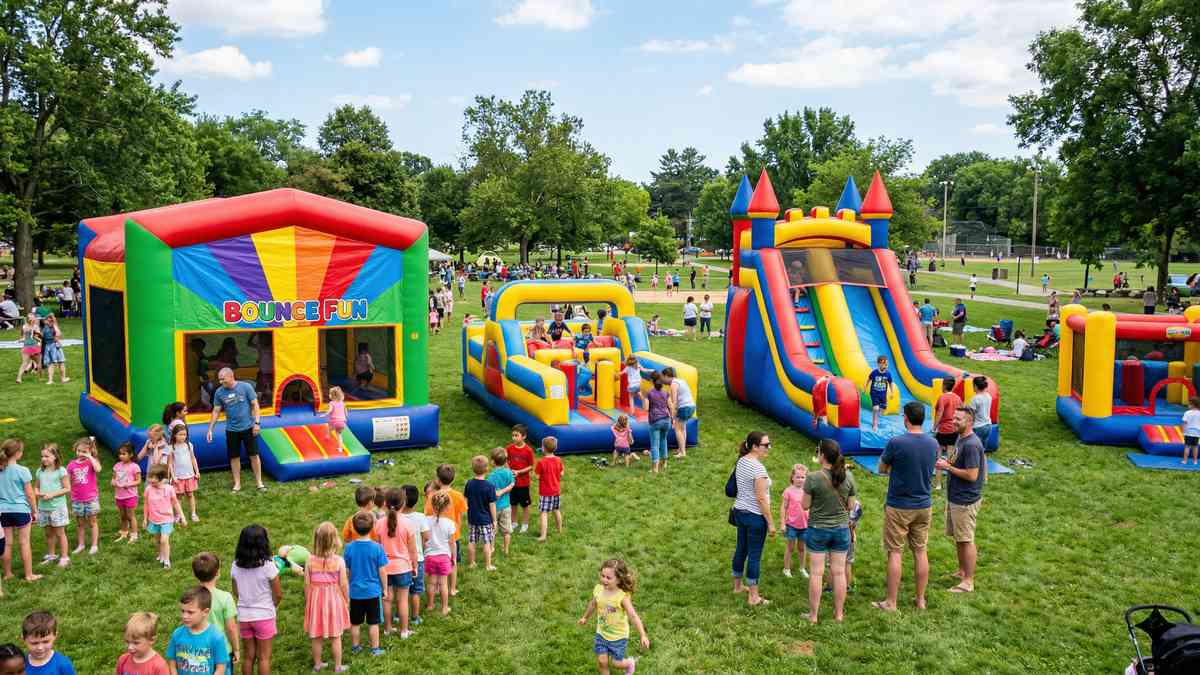
How to Start a Bounce House Rental Business in 2026
The Real Cost of Starting a Bounce House Rental Business
A bounce house rental business can clear $50,000–$100,000 in annual profit with the right setup. The barrier to entry is low — a few thousand dollars, a truck, and some insurance. But the operators who actually make money treat this like a real business, not a side hustle they stumbled into.
Here's what it takes to launch a bounce house rental business in 2026, from equipment costs to booking your first event.
Startup Costs: What You Actually Need
Forget the "$500 to start" claims you see online. A legitimate commercial rental operation needs proper equipment. Cut corners on materials and you'll replace units every season instead of every 4-5 years.
Equipment Budget
| Item | Cost Range | Notes |
|---|---|---|
| Commercial bounce house (15x15 ft) | $1,200–$2,500 | PVC or commercial Oxford cloth, stitched seams |
| Blower (1.5 HP) | $150–$300 | One per unit — always have a backup |
| Delivery vehicle | $5,000–$15,000 | Cargo van or enclosed trailer |
| Stakes, tarps, sandbags | $100–$200 | Per unit setup kit |
| Repair kit | $50–$100 | PVC glue, patches, spare D-rings |
Starting with 3-4 units is realistic. That puts your equipment cost at $4,000–$10,000 for the inflatable bouncers alone, plus whatever you spend on transport. Many operators start with one combo unit — an inflatable combo rents for $250–$350 per day versus $150–$200 for a basic bouncer.
Non-Equipment Costs
- Business license: $50–$500 depending on your city
- Liability insurance: $1,000–$2,500/year — non-negotiable
- Website and booking system: $500–$1,500 to set up
- Marketing (first 3 months): $500–$1,000 for local ads, Google Business listing, flyers
Total realistic startup: $8,000–$20,000. You can start smaller, but under $5,000 means residential-grade equipment that won't survive commercial use.
Choosing the Right Inflatables
Your first units determine your first year's revenue. Pick wrong and you're stuck with inventory nobody wants to rent.
What Rents Best
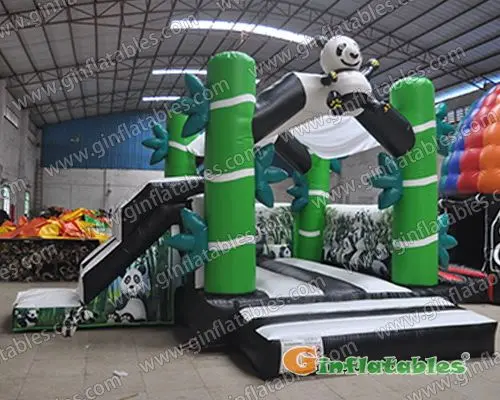
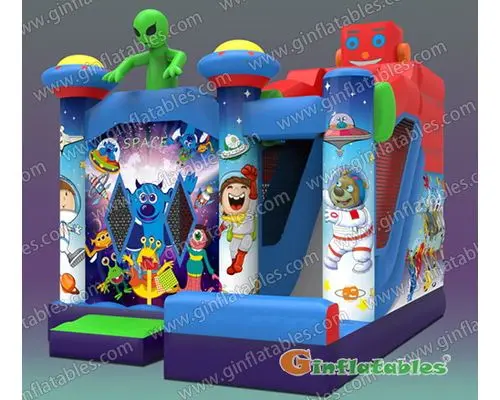
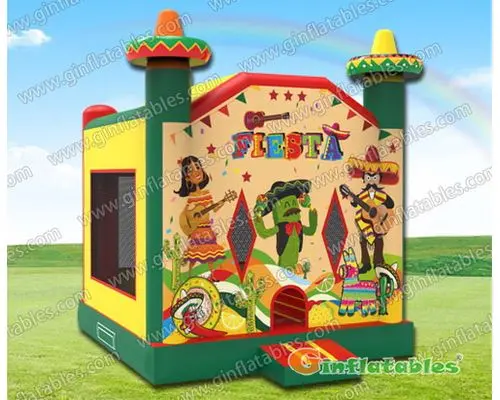
Standard 15x15 bounce houses are the bread and butter — they fit most backyards and handle 6-8 kids at once. But combo units with attached slides pull higher rental fees. A combo renting at $300/day pays for itself in 5-6 rentals.
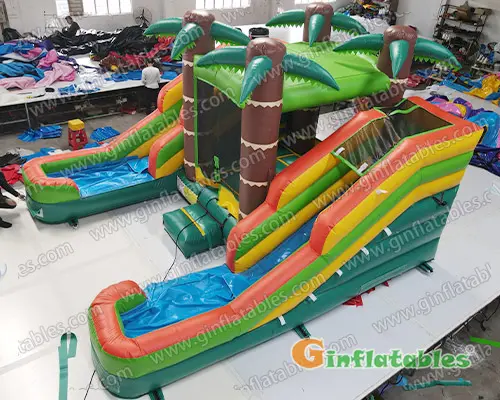
Water slides are seasonal gold. In warm climates, a commercial water slide renting at $350–$500/day can generate more revenue in four summer months than a bounce house does all year. The catch: they need more space, more water, and more setup time.
Material Matters
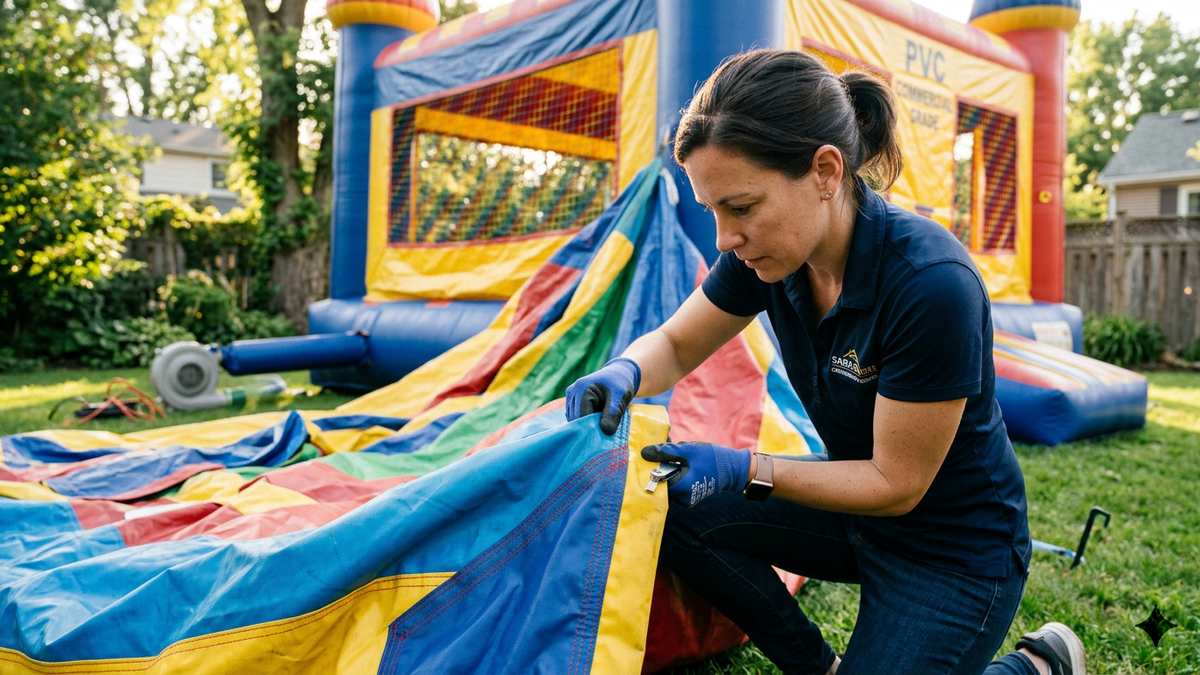
Commercial-grade PVC (0.55mm thickness) is the industry standard for rental units. It handles UV exposure, rain, and the wear of 40+ kids per weekend. Oxford cloth units cost less upfront but show wear faster — fine for occasional use, not for a unit going out every weekend.
Look for double-stitched seams, reinforced jumping areas, and commercial blowers. Residential-grade units use thinner material (0.4mm or less) and single-stitched seams. They'll last maybe 100 uses. A commercial unit does 500+.
Insurance and Legal Setup
Skip this and one injury shuts you down permanently.
General liability insurance covering inflatable rentals runs $1,000–$2,500 per year for $1M–$2M coverage. Some insurers specialize in amusement and event rentals — they understand the industry and price accordingly. Ask other local operators who they use.
What You Need on Paper
- LLC or similar entity — keeps business liability separate from personal assets
- General liability policy — most venues and event planners require proof of insurance before they'll book you
- Waiver/release form — have every customer sign one. A lawyer drafts this for $200–$500
- Local permits — some cities require amusement ride permits or special event licenses
Insurance isn't just protection — it's a sales tool. Customers choosing between two operators will pick the one who can show proof of coverage. Venues won't even consider an uninsured operator.
Getting Your First Bookings
Buying equipment is the easy part. Filling the calendar — that's the actual job.
What Works in Year One
Google Business Profile — free and gets you in front of people searching "bounce house rental near me." Add photos of every setup. Real photos, not stock images.
Facebook Marketplace and local groups — post availability every week. Parents planning birthday parties live on Facebook. A $200 rental listed in a local parents group gets eyeballs fast.
Referral discounts — give every customer $25 off their next rental for each booking they send your way. Word-of-mouth fills calendars faster than paid ads.
Partner with event venues — churches, community centers, parks departments. Offer to be their preferred vendor. They get a reliable operator, you get steady referrals.
Pricing Strategy
Check what competitors charge in your area, then price within 10% of the average. Undercutting by 30% signals cheap equipment and no insurance. Most markets support $150–$250 for a standard bounce house (4-6 hour rental) and $250–$400 for combos or water slides.
Weekend rates should be higher than weekday rates. Friday-Sunday is where 80% of your revenue comes from. Offer weekday discounts for daycares and corporate events to fill dead days.
Scaling: From Side Income to Full Business
Most operators follow the same growth path: start with 3-4 units, reinvest first-year profits into more inventory, and hit 8-12 units by year two. At that point, you need staff for deliveries.
One bounce house doing 4 rentals per month at $200 each brings in $9,600/year. With 8 units, that's $76,800 in gross revenue. Subtract insurance, fuel, maintenance, and marketing — net profit sits around $40,000–$60,000 for an owner-operator.
Adding obstacle courses and interactive games opens the corporate event market, which pays 2-3x more than backyard birthday parties. A single corporate field day booking can run $1,500–$3,000.
The operators who hit six figures aren't just renting more units. They're booking higher-value events — festivals, school carnivals, corporate team-building — where multiple units go out at once and day rates climb. For more on what makes commercial inflatables worth the investment, check out our guide to inflatable bounce houses.
Frequently Asked Questions
How much can you make with a bounce house rental business?
A single commercial bounce house can generate $8,000–$12,000 per year with consistent weekend bookings. Most full-time operators with 6-10 units report $50,000–$100,000 in annual gross revenue, with net profit margins around 50-60% after expenses.
Do I need a special license to rent bounce houses?
Requirements vary by location. Most areas require a standard business license and general liability insurance. Some cities classify inflatables as amusement rides and require additional permits or annual inspections. Check with your local government before launching.
How long do commercial bounce houses last?
A commercial-grade PVC bounce house lasts 4-7 years with proper maintenance and regular use (3-4 rentals per week during peak season). Material thickness, seam construction, and storage habits are the biggest factors.
What size bounce house is best to start with?
15x15 feet is the most versatile starting size. It fits standard backyards (needs a 20x20 ft area with clearance), holds 6-8 kids at once, and works for the widest range of events. Combo units in the 15x20 ft range pull higher rental rates.
Is bounce house rental seasonal?
Depends on your climate. In warm regions, it's nearly year-round. In areas with cold winters, outdoor season runs April through October. Indoor rentals to churches, gyms, and community centers can fill winter months, but volume drops 60-70% compared to summer.
The operators who fail aren't the ones who started small — they're the ones who bought cheap equipment, skipped insurance, or waited for bookings to come to them. Buy commercial-grade, get properly insured, and hustle for those first 20 bookings. Everything else builds from there.