Yacht & Dock Inflatables: A Buyer’s Guide for Waterfront Operators
Why Waterfront Operators Are Buying Inflatable Yacht and Dock Products
The inflatable yacht category has exploded over the past five years, and not just among private owners posting Instagram reels. Marina operators, lake resorts, and yacht charter companies are purchasing these products in volume because they solve a real problem: how do you add a water attraction to a dock, a shoreline, or a vessel without permanent construction? You don't pour concrete. You inflate.
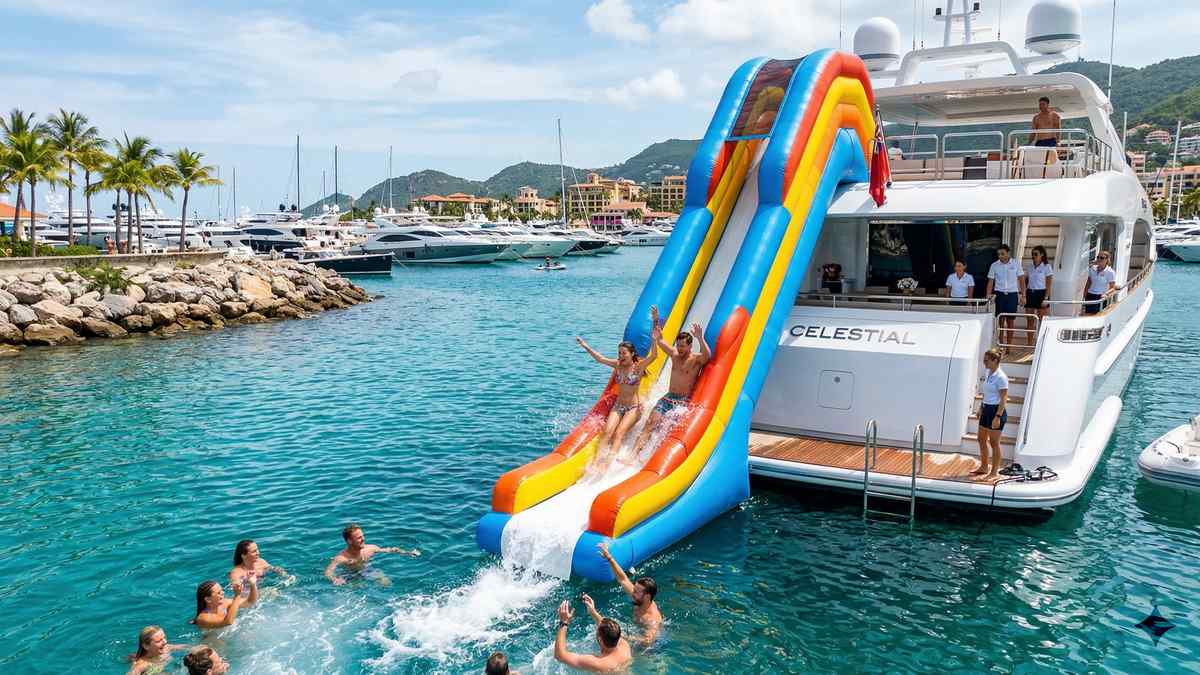
Three product families dominate this space. The dock slide attaches to a fixed pier or floating dock and sends riders into open water. The boat slide clamps or straps to a yacht's stern platform and works in deep water away from shore. And the broader category of yacht floats — lounges, platforms, trampolines — turns dead water beside a hull into a guest amenity. Each serves a different scene, a different buyer, and a different budget.
If you're sourcing for a commercial operation, the differences matter more than you'd think. A product that works perfectly off a 60-foot motor yacht at anchor will be a liability bolted to a municipal dock with a five-foot tidal swing. This guide breaks down what to buy, how to install it, and what the procurement path looks like depending on your operation.
Installation and Anchoring: Three Setups, Three Sets of Rules
Yacht Stern Mounting
A boat slide designed for stern use needs a secure upper attachment point — usually the flybridge rail, a davit arm, or a purpose-built mounting frame. The slide must clear the swim platform and deliver riders far enough from the hull to avoid contact. Most commercial-grade units use a combination of ratchet straps and stainless steel D-ring connections. For charter operations running multiple trips per week, inspect these attachment points every 30 days minimum.
Fixed Dock and Pier
The inflatable dock slide is the workhorse of resort and marina setups. It anchors to the dock's edge with heavy-duty straps or through-bolted plates, and the landing zone is roped off in open water. Tidal range is the variable most buyers underestimate. If your dock is fixed (not floating), a six-foot tide means the slide's exit height changes dramatically between morning and afternoon. Floating docks solve this, but add their own stability concerns — the slide's weight shifts the dock's center of gravity.
Open-Water Lake Platforms
Lake resorts and waterfront clubs often deploy floating platforms 50 to 100 meters offshore, then attach slides, trampolines, and climbing walls to create a self-contained water park. Anchoring uses mushroom anchors or helical screws driven into the lakebed, with enough chain scope to handle water level changes. This setup pairs well with our water world and complete water parks configurations, which are built for exactly this kind of open-water deployment.
Materials, Safety, and What the Specs Actually Mean
Every manufacturer will tell you their PVC is "commercial grade." That phrase means almost nothing without numbers. Here's what to look for:
| Specification | Personal Use | Commercial / Resort Use |
|---|---|---|
| PVC Thickness | 0.6–0.7 mm | 0.9–1.2 mm |
| Seam Type | Glued | Heat-welded (RF or hot air) |
| Weight Capacity | 200–400 kg | 600–1500 kg |
| Max Simultaneous Users | 2–4 | 8–20+ |
| UV Coating | Basic | Anti-UV + anti-fungal treatment |
| Non-Slip Surface | Textured vinyl | EVA foam pads or molded grip zones |
A giant inflatable yacht platform rated for 10+ users needs reinforced anchor points at every two-meter interval along its perimeter. Not every two meters of the platform — every two meters of the perimeter. That distinction matters when you're comparing quotes. Count the D-rings. If a 6m x 3m platform has fewer than nine anchor points, it's built for backyard pools, not commercial water.
Non-slip surfaces deserve more attention than they get. Wet inflatable vinyl is dangerously slick. The best commercial units use bonded EVA foam pads on all walking and climbing surfaces. Second-tier products use a textured vinyl print, which works for about one season before UV breaks down the texture. For a thorough overview of risk management, read our article on safety precautions for inflatables.
Commercial Procurement: Personal Yacht vs. Marina vs. Resort Package
The buying process looks different depending on your scale.
Private Yacht Owners
Single-unit purchases. A boat slide, maybe a floating lounge, possibly a towable. Budget: €800–€4,000. These buyers care about storage footprint and setup speed. They want something one person can inflate in 10 minutes and stow in a lazarette locker.
Marina and Charter Operations
Fleet buyers looking at inflatable yachts for sale in bulk — typically 5 to 20 units across slides, floats, and platforms. The priority shifts to durability, warranty terms, and spare-part availability. A charter company in the Greek islands can't wait three weeks for a replacement bladder in July. Smart operators keep a repair kit and one backup unit per product type on hand. Our range of inflatable water slides and slip and slides are popular with charter fleets because the sizing works with most 40–70 foot vessels.
Resort and Waterfront Park Packages
This is project-level procurement. A lake resort building a waterfront attraction zone might order 15–30 connected modules — slides, trampolines, climbing towers, bridges, airtight pools for shallow-water containment zones, and floating docks to tie it all together. Lead times run 30–60 days for custom configurations. Budget: €15,000–€80,000+ depending on the scope. At this level, you should expect site layout consultation, CAD drawings of the deployment zone, and a bill of materials that accounts for anchoring hardware, blowers, and safety signage.
Accessories and Upgrades That Actually Earn Their Cost
Not every add-on is worth the money. These are.
An inflatable yacht float — the flat lounging platforms that sit at waterline beside the hull — pays for itself in guest satisfaction at charter operations. They're low-risk, low-maintenance, and guests use them constantly. Stock two or three sizes.
Inflatable yacht lake floats serve a slightly different role for inland operations. Lake water is calmer than coastal, so lighter-duty floats hold up well and the price point drops. For lake resorts, these are high-volume consumables. Budget for replacement every two to three seasons under heavy commercial use.
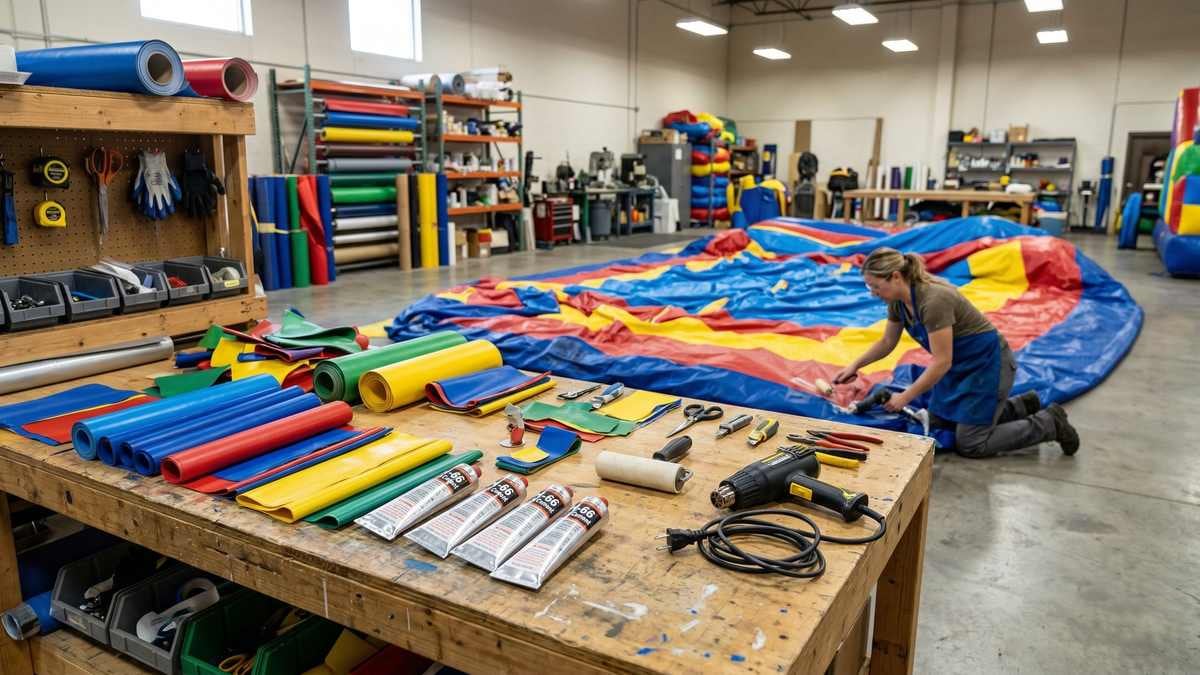
Floating mats (closed-cell foam, not inflatable) complement any inflatable setup. They don't puncture, they don't deflate, and guests love them. Repair kits are non-negotiable for commercial buyers — get the industrial version with PVC cement, not just adhesive patches. And proper storage bags with moisture-wicking liners will add a full season to product lifespan.
Frequently Asked Questions
What is the typical lifespan of a commercial inflatable dock slide?
With proper maintenance — rinsing after saltwater use, storing out of direct sun when not deployed, and re-treating seams annually — a quality inflatable dock slide lasts three to five seasons of heavy commercial use. Budget models might give you two. The seams fail before the material does, which is why heat-welded construction matters so much at the commercial level.
Can I use a boat slide designed for yachts on a fixed dock instead?
Technically yes, but it's not ideal. A boat slide is engineered for a specific mounting height and angle relative to the water. Fixed docks sit at different heights depending on tide and water level. You'll get better performance and fewer safety issues with a purpose-built dock slide that accounts for these variables. The attachment hardware is also different — yacht slides use rail clamps, dock slides use bolt-down plates or strap anchors.
What insurance considerations apply to commercial inflatable yacht operations?
Most marine liability policies require that commercial inflatables carry EN 15649 certification (Europe) or ASTM F2374 (North America) for public use. Your insurer will want to see the manufacturer's test reports, your staff training records, and a daily inspection log. Some underwriters offer premium discounts for operations that use certified lifeguard supervision. Get your insurer involved before you purchase — not after.
How many staff are needed to operate a waterfront inflatable park?
Industry standard is one trained attendant per 10 guests on the water, plus a shore-side coordinator managing waivers and life jacket distribution. A mid-sized setup with 15–20 inflatable modules serving 40 guests at a time needs four to five staff on duty. Invest in proper training — it reduces incident rates and your insurance company will notice.
Do inflatable yacht floats work in saltwater?
Yes, but saltwater accelerates UV degradation and can corrode metal valve fittings if you don't rinse after every use. Look for units with stainless steel or brass valves, not chrome-plated zinc. The PVC itself handles salt fine. The weak points are always the hardware and the seams.
The Real Buying Decision
The waterfront inflatable market is full of products that look identical in photos and vary wildly in construction. Price is a signal, but not a reliable one — some mid-priced products outperform expensive ones because the manufacturer spent money on materials instead of marketing. Ask for seam samples. Ask for the PVC data sheet. Ask how many D-rings are on the perimeter. The answers will tell you more than any product page ever will. And if a supplier can't answer those questions, that tells you something too.