Commercial Inflatable Tents: A Procurement Guide for Event Operators
Why Blow Up Tents Have Become Standard Equipment for Event Operators
Ten years ago, event operators hauled pole tents on flatbed trucks and spent half a day rigging them. Now? Blow up tents go from trailer to fully inflated in under thirty minutes — sometimes fifteen. That shift has changed the math on event logistics, staffing, and profit margins in a real way.
Whether you're running trade show activations, music festivals, corporate roadshows, or weekend rental operations, the inflatable event tent has moved from novelty to workhorse. The question isn't whether to add them to your fleet — it's which configuration and size class actually fits your operation. This guide covers the practical side: structure types, sizing for foot traffic, procurement specs, and return on investment.
Use Cases by Tent Category
Not all inflatable tents serve the same purpose. The category has split into distinct product types, each built for different event profiles.
| Category | Typical Use | Best For | Capacity Range |
|---|---|---|---|
| Inflatable Event Tent | Brand activations, product launches, registration areas | Trade show builders, brand roadshow teams | 20–100 guests |
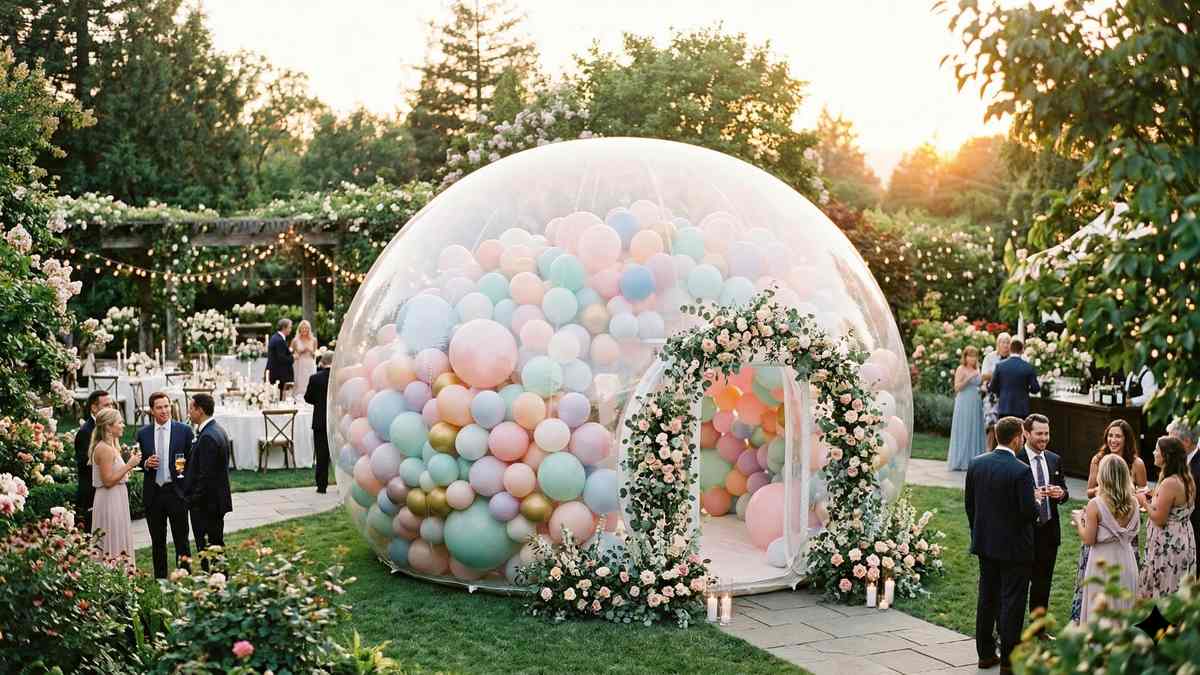
| Inflatable Dome | Projection mapping, immersive experiences, VIP lounges | AV production companies, experiential agencies | 30–150 guests |
| Inflatable Club Tent | Temporary nightlife venues, festival VIP areas | Event promoters, equipment rental operators | 50–300 guests |
| Large Inflatable Party Tent | Weddings, corporate dinners, community festivals | Rental companies, commercial real estate events | 100–500 guests |
The inflatable club tent category has grown fastest in European markets. Festival operators discovered that a branded, enclosed inflatable space outperforms a traditional marquee for bar revenue per square metre. The enclosed feel drives longer dwell times.
Structure, Setup, and Transport Efficiency
Air Beam Construction
Modern inflatable dome and tent structures use sealed air beams rather than continuous blower inflation. The difference matters for commercial buyers. Sealed air beams hold pressure after inflation — if the blower fails mid-event, the structure stays up. Continuous-blow models collapse. For any event where you can't afford a structural failure in front of a client, sealed beams are the only serious option.
Setup Crew and Time
A portable inflatable tent in the 20×20 ft range typically needs two people and 15–20 minutes. Step up to a 40×60 ft inflatable dome tent and you're looking at a four-person crew and about 45 minutes. Compare that to a frame tent of the same size: six crew, three hours, and a box truck full of aluminium.
Transport volume is where inflatables really pull ahead. A large inflatable party tent that covers 2,400 square feet packs down to roughly the size of two chest freezers. That means you can run multiple setups per day from a single cargo van — a scheduling advantage that compounds fast during peak season.
Anchoring and Surface Compatibility
Grass, asphalt, concrete, indoor flooring. Each surface demands different anchoring. Quality manufacturers supply stake kits for soft ground and sandbag or water barrel systems for hard surfaces. If a supplier doesn't offer both, move on. You'll also want the right accessories — ground tarps, repair kits, and backup blower fittings — sourced at purchase time, not scrambled for the night before an event.
Sizing for Foot Traffic Models
Picking the right tent size isn't about maximum capacity. It's about traffic flow, furniture layout, and what the space needs to feel like.
Small Roadshow / Brand Activation (10×10 to 15×15 ft)
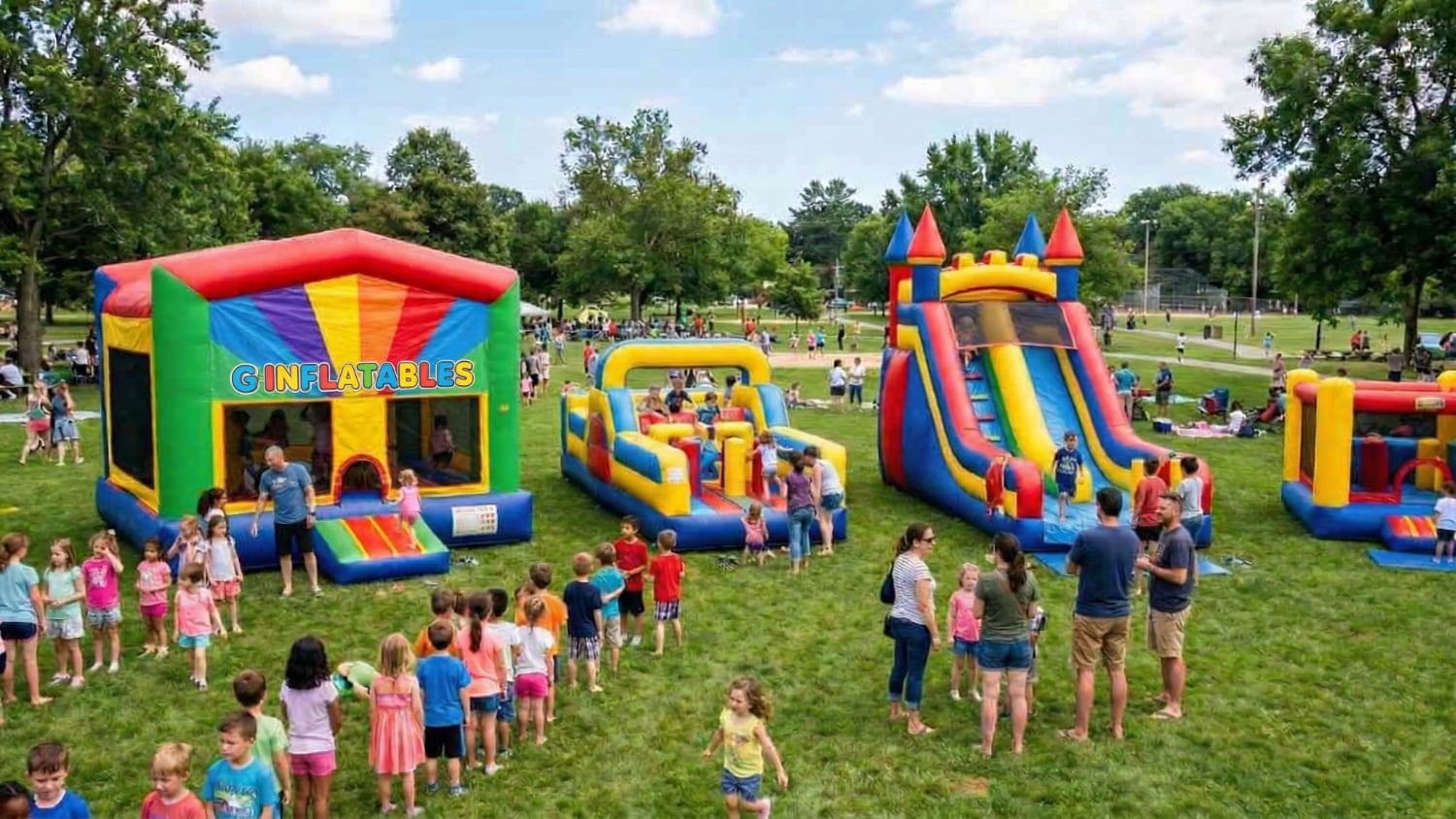
Ideal for a portable inflatable tent setup at retail locations, car dealerships, or parking lot promos. Fits a product display, two staff, and a small queue. One person can set this up solo. Budget entry point for operators adding tents alongside inflatable bouncers and interactive games in a family event package.
Mid-Size Pop-Up (20×20 to 30×30 ft)
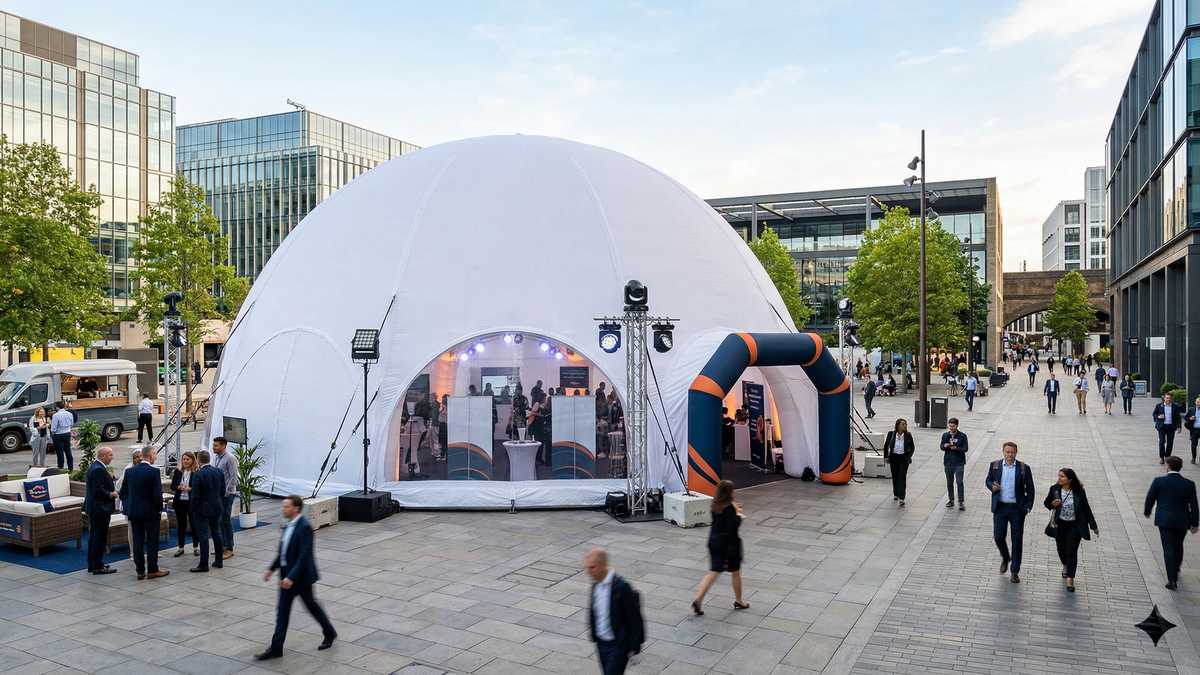
The sweet spot for corporate events and trade show exteriors. An inflatable dome tent at this scale accommodates 50–80 standing guests or 30–40 seated. Enough room for AV equipment, a bar station, and branded walls. Operators running a rental business focused on growth will find this is the size class that books most consistently.
Large Festival / Nightlife (40×60 ft and above)
This is inflatable nightclub tent territory. At this footprint, you're hosting 200+ guests with a DJ booth, dance floor, lounge seating, and potentially multiple bar points. The infrastructure demands go up — you'll need power distribution, emergency exits per local fire code, and sometimes HVAC ducting. But the per-event revenue at this scale justifies the investment quickly.
Commercial Procurement: What to Specify
Custom Branding
Full-colour digital printing on inflatable fabric is standard now. Expect to provide vector artwork at 150+ DPI equivalent. Most factories need 15–25 business days for a custom-branded inflatable club tent. Stock colours ship faster — often 7–10 days — but a branded unit pays for itself in client perception. If you're buying for a brand activation fleet, always order at least one backup panel set.
Weather Ratings
Ask for specific wind speed ratings, not vague "weather resistant" claims. Commercial-grade blow up tents should handle sustained 30+ mph winds when properly anchored. Rain ratings should specify hydrostatic head — 3,000mm minimum for all-season European use. UV resistance matters too, especially for operators in southern markets who leave tents deployed for multi-day festivals. For more on preparing inflatables for outdoor conditions, our piece on getting ready for your next outdoor adventure covers some useful ground.
Spare Parts and Blower Kits
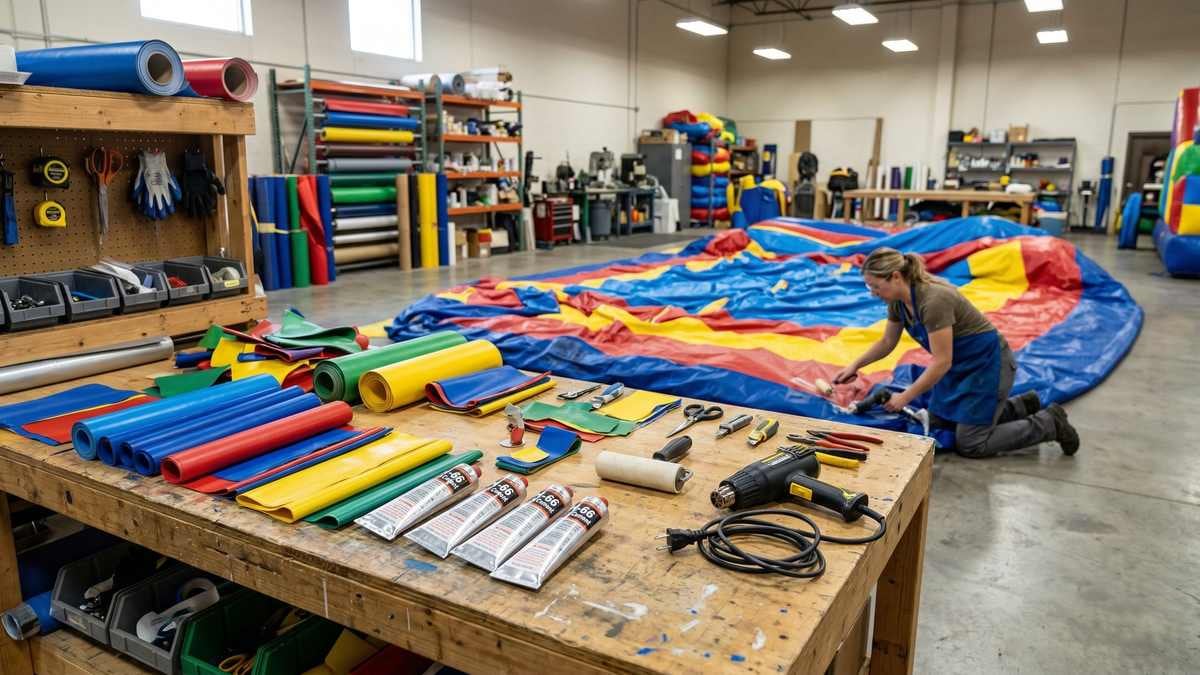
Every commercial tent order should include: one backup blower, a valve repair kit, fabric patch material matching the tent colour, and a complete set of replacement anchor straps. The blower is the single point of failure. Operators who skip the backup blower will, without exception, regret it at the worst possible time.
Cost Structures and ROI Models
Pricing varies by size, customisation, and material grade — but here are realistic ranges for commercial-quality units from established manufacturers:
| Size Class | Purchase Cost (USD) | Typical Rental Rate / Event | Break-Even |
|---|---|---|---|
| Small (10×10 – 15×15 ft) | $1,500 – $3,500 | $300 – $600 | 5–8 events |
| Mid (20×20 – 30×30 ft) | $4,000 – $9,000 | $800 – $1,800 | 4–7 events |
| Large (40×60 ft+) | $10,000 – $25,000 | $2,500 – $6,000 | 4–6 events |
Short-Term Rental Operations
Rental operators typically hit ROI within one season. A mid-size inflatable event tent booked 15–20 times per year generates $12,000–$36,000 in gross rental revenue against a $6,000 purchase. Factor in transport, cleaning, and minor repairs — you're still looking at 60–70% margins.
Brand Sponsorship and Contracted Events
The inflatable nightclub tent segment has developed its own revenue model. Festival operators contract branded tent experiences to alcohol sponsors at $5,000–$15,000 per event. The sponsor gets an immersive branded environment; the operator provides the structure and staffing. Three or four sponsored events per summer can fully amortise a large tent purchase.
Long-Term Fleet Economics
Durability matters for ROI calculations. A well-maintained commercial inflatable tent should last 5–7 years with regular use. That's 75–140 deployments. Amortised across that lifespan, even a $20,000 tent costs under $200 per use. Hard to beat that with any rigid structure.
Frequently Asked Questions
How long does it take to inflate a commercial inflatable tent?
Small to mid-size units inflate in 10–20 minutes with a standard electric blower. Large inflatable dome tent structures (40 ft+) take 30–45 minutes with a higher-capacity blower. Setup time including anchoring and interior prep adds another 15–30 minutes depending on crew size.
Can inflatable tents be used in winter or extreme weather?
Yes, provided the tent is rated for it. PVC-coated fabrics handle temperatures down to -20°C without cracking. Snow load is the main concern — inflatable structures shed snow poorly compared to peaked rigid tents, so heated blower air or periodic clearing is necessary in heavy snowfall areas.
What permits are typically required for commercial inflatable tent events?
Requirements vary by jurisdiction, but most municipalities require a temporary structure permit for any tent over 200 square feet. Fire safety certificates, occupancy limits, and exit signage are standard requirements. Some regions require engineered wind load documentation — another reason to buy from manufacturers who provide certified specs.
Are custom-branded inflatable tents worth the extra cost?
For rental operators serving corporate clients, absolutely. A branded tent commands 20–40% higher rental rates than a generic white unit. For operators running their own events, branding turns every deployment into advertising. The upcharge for full-colour printing typically runs 15–25% over stock — paid back within a few bookings.
What's the biggest mistake buyers make when purchasing their first commercial tent?
Buying too small. Operators almost always underestimate the space they need once furniture, AV gear, and traffic flow are accounted for. A tent that feels spacious empty will feel cramped at 60% of its rated standing capacity once you add tables and a bar. Size up one class from your initial instinct. You won't regret it.